Sunday, December 15

How one British pop song helped to free Nelson Mandela

The anti-apartheid message was serious and heartfelt but the song that alerted many around the world to the injustices of the South African regime could not have been more upbeat.
"Free Nelson Mandela" was a Top 10 hit in the United Kingdom for The Special AKA in 1984, and it instantly became the unofficial anthem and slogan for the international anti-apartheid movement.
The song's eponymous subject rose to prominence in the 1950s as a radical young member of the African National Congress, the main opposition movement to the segregationist South African government.
As an advocate of guerrilla attacks, Mandela, who has died aged 95, was frequently arrested and eventually convicted in 1964, along with other ANC leaders, for sabotage. He received a life prison sentence, and spent 27 years in a cell, mostly on Robben Island, off the South African coast.
While Mandela languished in jail, an anti-apartheid movement slowly developed in the West, starting with sporting sanctions against South Africa and later an artists' boycott of performances in the country.
The composer of "Free Nelson Mandela," Jerry Dammers -- the founder of the multiracial English ska-punk band The Specials, later renamed The Special AKA -- admits he knew little about Mandela before he attended an anti-apartheid concert in London in 1983, which gave him the idea for the song.
"I'd never actually heard of Nelson Mandela although I knew a lot about the anti-apartheid movement and he was becoming a figurehead for the whole movement," Dammers told CNN.
The keyboardist, who also wrote "Ghost Town," the seminal Specials song against the policies of Great Britain's prime minister at the time, Margaret Thatcher, may not have known much about the imprisoned anti-apartheid figurehead, but his lyrics brought Mandela's struggle to the attention of a wider audience.
The song's relentlessly upbeat feel certainly helped push it up the charts. "It ends with the thing of 'I'm begging you' and then 'I'm telling you,'" Dammers said. "It is a demand but in a positive way, it brought some sort of hope that the situation could be sorted out."
Veteran DJ and broadcaster Paul Gambaccini said the song was effective in educating people about Mandela, whose reputation was low in the West at the time. "Now we have this sainted vision of Mandela, but at the time Thatcher treated him as a terrorist. So to release a record about someone whom your PM considers a terrorist is quite brave."
The song helped to change perceptions about Mandela, according to Gambaccini, a presenter on leading UK station BBC Radio 2. "It did educate people about apartheid an incredible amount, because they certainly weren't going to learn about Mandela from conventional sources. The word on him from on high was very bad, so it was up to musicians to take a leading role in rehabilitating his reputation."
"Free Nelson Mandela" was also an extremely effective protest song, he added, a view echoed in 2010 by left-leaning current affairs magazine New Statesman, which included it in a list of thetop 20 political anthems of all time.
"'Free Nelson Mandela' was effective for two reasons," he said. "It's a good pop record in that it's catchy and sounds good. And you immediately know what it's about, because the first three words are 'Free Nelson Mandela.' And secondly it had a clear message that the audience agreed with."
And the fact that The Specials were at the time a "Top 10 band" meant the audience took note. "If the Specials say it, there must be something to it," as Gambaccini noted.
Free Nelson Mandela, 21 years in captivity, Shoes too small to fit his feet, His body abused but his mind is still free, Are you so blind that you cannot see? I said: Free Nelson Mandela, I'm begging you, Free Nelson Mandela
Lyrics to "Free Nelson Mandela"
Four years later, in 1988, Dammers and the band Simple Minds helped organize the Nelson Mandela 70th Birthday Concert at London's Wembley Stadium, featuring acts such as Dire Straits, George Michael and Sting. Peter Gabriel played "Biko" about another anti-apartheid activist, while Steven Van Zandt performed his influential song "Sun City."
The event was watched by a global television audience of 600 million and is credited with hardening popular opposition internationally to the apartheid regime. Gambaccini is proud of his contribution to the event, for which he was one of the TV presenters.
"The concert was an incredible success," he said. "It had the biggest TV audience to date, and put Mandela in Topic A position around the world. But it might never have happened without the song 'Free Nelson Mandela,' because this inspired some of the artists who appeared at Wembley to be there."
As the impact of the concert rippled around the world, the South African government was secretly holding talks with Mandela. These meetings culminated in his release on February 11, 1990. Four years later, he succeeded F.W. de Klerk to become the republic's first black president.
Mandela never forgot the debt he owed to supporters in the United Kingdom. In 1996 he used a speech to both Houses of Parliament in London to give his thanks: "We take this opportunity once more to pay tribute to the millions of Britons who, through the years, stood up to say: No to apartheid!"
In 2008, singer Amy Winehouse joined Dammers for the finale to a concert in London's Hyde Park marking Mandela's 90th birthday. The song's message had long since been realized -- and indeed the by-then-frail elder statesman appeared onstage -- but it was received as warmly as ever.

Nelson Mandela: The miracle years


With military pomp and traditional rituals, South Africa buried Nelson Mandela on Sunday, the end of an exceptional journey for the prisoner turned president who transformed the nation.
Mandela was laid to rest in his childhood village of Qunu.
Tribal leaders clad in animal skins joined dignitaries in dark suits at the grave site overlooking the rolling green hills.
As pallbearers walked toward the site after a funeral ceremony, helicopters whizzed past dangling the national flag. Cannons fired a 21-gun salute, its echoes ringing over the quiet village.
Mandela's widow, Graca Machel, dabbed her eyes with a handkerchief as she watched the proceedings.
"Yours was truly a long walk to freedom. Now you have achieved the ultimate freedom in the bosom of God, your maker," an officiator at the grave site said.
Military pallbearers gently removed the South African flag that draped the coffin and handed it to President Jacob Zuma, who gave it to Mandela's family.
At the request of the family, the lowering of the casket was closed to the media.
Qunu, South Africa
The funeral ceremony
Before making their way to the grave site, mourners attended a service in a tent set up at the family compound. They wept, sang and danced in what has become a familiar celebration of his life.
Mandela's coffin, draped in his country's flag, lay atop black and white cattle skins in front of a crescent of 95 candles, each marking a year of his life.
As the national anthem "Nkosi Sikelel' iAfrika" or "God Bless Africa" drifted over the village, a giant picture of Mandela looked down with a smile. Mourners placed their fists on their chests, some with tears streaming down their faces.
"Today marks the end of an extraordinary journey that began 95 years ago," Zuma said during the ceremony. "It is the end of 95 glorious years of a freedom fighter ... a beacon of hope to all those fighting for a just and equitable world order."
The president thanked Mandela's family for sharing him with the world and said his memory will live on.
"We shall not say goodbye, for you are not gone," Zuma said. "You'll live forever in our hearts and minds."
About 4,500 people gathered in the tent, including Machel, who sat next to Mandela's ex-wife, Winnie Mandela.
In other major cities including Johannesburg, crowds watched the funeral at special screenings in stadiums.

'I've lost a brother'
Mourners represented all spheres of Mandela's life. There were celebrities, presidents, relatives and former political prisoners.
"You symbolize today and always will ... qualities of forgiveness and reconciliation," said a tearful Ahmed Kathrada, a close friend who served time in prison with Mandela for defying the apartheid government. "I've lost a brother. My life is in a void, and I don't know who to turn to."
Talk show host Oprah Winfrey, Prince Charles and business mogul Richard Branson were also among the attendees.
Final chapter
The funeral and burial cap 10 days of national mourning for a man whose fame transcended borders.
"Nelson Mandela was our leader, our hero, our icon and our father as much as he was yours," Tanzanian President Jakaya Kikwete said, regaling mourners with tales of a secret visit Mandela made in 1962 to Dar es Salaam to gather support for his party, the African National Congress.
During his fight against apartheid, Mandela fled to Tanzania, which housed the headquarters of the ANC. The white minority government had banned it in South Africa.
In sharp contrast to the days of apartheid, the events honoring Mandela included a great deal of pageantry, as well as state honors.
Mandela's body arrived Saturday in the tiny village in the Eastern Cape province, where he grew up surrounded by lush, tranquil hills and velvety green grass.
Before arriving in Qunu, the body lay in state for three days in Pretoria. After an emotional service at the air base there, which included the handing over of his body to the ruling African National Congress, it was put in a military helicopter for the final leg of his journey.
Though he dined with kings and presidents in his lifetime, the international icon relished his time at the village. He herded cows and goats there as a child, and always said it's where he felt most at peace. Some of his children are also buried there.
"He really believed this is where he belonged," said his daughter, Maki Mandela.
Mandela was imprisoned for 27 years for defying the racist apartheid government that led South Africa for decades. He emerged from prison in 1990 and became South Africa's first black president four years later, all the while promoting forgiveness and reconciliation.
His defiance of white minority rule and his long incarceration for fighting segregation focused the world's attention on apartheid, the legalized racial segregation enforced by the South African government until 1994.
Years after his 1999 retirement from the presidency, Mandela was considered the ideal head of state. He became a yardstick for African leaders, who consistently fell short when measured against him.
"Thank you for being everything we wanted and needed in a leader during a difficult period in our lives," Zuma said.
In keeping with tradition, Mandela was laid to rest in the afternoon, when the sun is at its highest.

The smuggled Shakespeare book that inspired Nelson Mandela

Nelson Mandela spent almost three decades in jail, but he wasn't alone -- he had two Indian goddesses and a 17th century playwright for company.
Locked in solitary confinement on Robben Island, newspapers were banned and letters from loved ones a rare treat.
Where did he find the inspiration to continue his long struggle for freedom?
As the twittersphere explodes with quotes from the legendary leader, it's perhaps easy to forget there was a time when Mandela was in need of a few words of wisdom himself.
He found them in the musings of another great thinker -- one born centuries before and on the other side of the world.
A tattered book covered in luminous Hindu deities might have seemed like a strange choice for the South African political activist languishing in his cell.
But the beatifically smiling women on the cover knew something the prison wardens didn't.

The Robben Island "Complete Works of Shakespeare" was disguised in Diwali cards.
SHAKESPEARE BIRTHPLACE TRUST
Inside was the "Complete Works of Shakespeare," and the historic text became a source of strength for Mandela and his fellow inmates during their darkest days.
A bible by any other name
It became known as the "Robben Island Bible," and today is one of the most remarkable artifacts from Mandela's 27 years in jail.
"What resonance does a white guy from England 400 years ago have to a group of South African political prisoners in the latter half of the 20th century?" said Matthew Hahn, who wrote a play based on the "Robben Island Bible," and interviewed many of the inmates who read it.
Cowards die many times before their deaths/The valiant never taste of death but once
William Shakespeare passage, as signed by Nelson Mandela in prison
"There's this universality to Shakespeare -- including many lessons on good and bad leadership -- and I think Mandela found resonance in his words. He once said that 'To be taken seriously as a politician, one must always quote from Shakespeare,' and a lot of his speeches when he was president did just that."
The valiant
The book was smuggled into the jail by political prisoner Sonny Venkatrathnam, who disguised it in colorful Diwali cards celebrating the Hindu festival of lights, convincing the warden it was his bible.
Between 1975 and 1978, the volume was passed between 33 of Venkatrathnam's fellow prisoners -- including Mandela.
Many of the inmates signed and dated their names beside particularly poignant passages -- words of hardship, political unrest, or injustice.

Act II, Scene 2: Julius Caesar's words of wisdom inspired Mandela for years to come.
MATTHEW HAHN
Mandela chose a passage from Julius Caesar -- just before the Roman statesman leaves for the senate on the Ides of March -- and his sweeping handwriting on the now-yellowing page is a haunting reminder of the activist's dedication to his cause.
It includes the lines: "Cowards die many times before their deaths/The valiant never taste of death but once."
"I believe when Nelson Mandela signed this passage, he recognized this book would get out and be circulated in the liberation movement -- his would be the quote people looked to," said Hahn.
It was an incredibly powerful quote -- he lived his entire life according to these two lines
Playwright William Hahn, on the Shakespeare passage which inspired Nelson Mandela
"It was an incredibly powerful quote -- he lived his entire life according to these two lines."
Lasting impression
The quote is all the more poignant considering Mandela's speech during the 1960s Rivonia Trial, where he said: "If need be, it is an ideal for which I am prepared to die."
Mandela signed the passage December 16, 1977. He never could have imagined that December 16 would later be known as "Reconciliation Day" in South Africa -- a public holiday which only came into effect after the fall of apartheid.
While Hahn believes the "Robben Island Bible" began as an attempt by Venkatrathnam to gain the autographs of the most famous political activists at the time, it has now become a powerful memento of their many years -- and sources of inspiration -- behind bars.
http://i2.cdn.turner.com/cnn/dam/assets/131206164556-nelson-mandela-shakespeare-sonny-entertain-feature.jpg
Sonny Venkatrathnam, who smuggled the book to Nelson Mandela in jail.
SHAKESPEARE BIRTHPLACE TRUST
"It was amazing to see visitors from all over the world drawn to this book like a magnet," said Jonathan Bate, Professor of English Literature at Oxford University, who helped curate the British Museum's Shakespeare exhibition last year.

"It was a coming together of one of the greatest writers of humanity, and one of the greatest humans of the 20th century. With Mandela's death comes a particular poignancy in a passage referring to the death of the valiant."

Nelson Mandela, anti-apartheid icon and father of modern South Africa


Freedom fighter, prisoner, moral compass and South Africa's symbol of the struggle against racial oppression.
That was Nelson Mandela, who emerged from prison after 27 years to lead his country out of decades of apartheid.
His message of reconciliation, not vengeance, inspired the world after he negotiated a peaceful end to segregation and urged forgiveness for the white government that imprisoned him.
"As I walked out the door toward the gate that would lead to my freedom, I knew if I didn't leave my bitterness and hatred behind, I'd still be in prison," Mandela said after he was freed in 1990.
Mandela, a former president, battled health issues in recent years, including a recurring lung infection that led to numerous hospitalizations.
Despite rare public appearances, he held a special place in the consciousness of the nation and the world.
"Our nation has lost its greatest son. Our people have lost a father," South African President Jacob Zuma said. "What made Nelson Mandela great was precisely what made him human. We saw in him what we seek in ourselves."
His U.S. counterpart, Barack Obama, echoed the same sentiment.
"We've lost one of the most influential, courageous and profoundly good human beings that any of us will share time with on this Earth," Obama said. "He no longer belongs to us -- he belongs to the ages."
A hero to blacks and whites
Mandela became the nation's conscience as it healed from the scars of apartheid.
is defiance of white minority rule and long incarceration for fighting against segregation focused the world's attention on apartheid, the legalized racial segregation enforced by the South African government until 1994.
In his lifetime, he was a man of complexities. He went from a militant freedom fighter, to a prisoner, to a unifying figure, to an elder statesman.
Years after his 1999 retirement from the presidency, Mandela was considered the ideal head of state. He became a yardstick for African leaders, who consistently fell short when measured against him.
Warm, lanky and charismatic in his silk, earth-toned dashikis, he was quick to admit to his shortcomings, endearing him further in a culture in which leaders rarely do.
His steely gaze disarmed opponents. So did his flashy smile.
Former South African President F.W. de Klerk, who was awarded the Nobel Peace Prize with Mandela in 1993 for transitioning the nation from a system of racial segregation, described their first meeting.
"I had read, of course, everything I could read about him beforehand. I was well-briefed," he said.
"I was impressed, however, by how tall he was. By the ramrod straightness of his stature, and realized that this is a very special man. He had an aura around him. He's truly a very dignified and a very admirable person."
For many South Africans, he was simply Madiba, his traditional clan name. Others affectionately called him Tata, the word for father in his Xhosa tribe.
A nation on edge
Mandela last appeared in public during the 2010 World Cup hosted by South Africa. His absences from the limelight and frequent hospitalizations left the nation on edge, prompting Zuma to reassure citizens every time he fell sick.
"Mandela is woven into the fabric of the country and the world," said Ayo Johnson, director of Viewpoint Africa, which sells content about the continent to media outlets.
When he was around, South Africans had faith that their leaders would live up to the nation's ideals, according to Johnson.
"He was a father figure, elder statesman and global ambassador," Johnson said. "He was the guarantee, almost like an insurance policy, that South Africa's young democracy and its leaders will pursue the nation's best interests."
There are telling nuggets of Mandela's character in the many autobiographies about him.
An unmovable stubbornness. A quick, easy smile. An even quicker frown when accosted with a discussion he wanted no part of.
War averted
Despite chronic political violence before the vote that put him in office in 1994, South Africa avoided a full-fledged civil war in its transition from apartheid to multiparty democracy. The peace was due in large part to the leadership and vision of Mandela and de Klerk.
"We were expected by the world to self-destruct in the bloodiest civil war along racial grounds," Mandela said during a 2004 celebration to mark a decade of democracy in South Africa.
"Not only did we avert such racial conflagration, we created amongst ourselves one of the most exemplary and progressive nonracial and nonsexist democratic orders in the contemporary world."
Mandela represented a new breed of African liberation leaders, breaking from others of his era such as Robert Mugabe by serving one term.
In neighboring Zimbabwe, Mugabe has been president since 1987. A lot of African leaders overstayed their welcomes and remained in office for years, sometimes decades, making Mandela an anomaly.
But he was not always popular in world capitals.
Until 2008, the United States had placed him and other members of the African National Congress on its terror list because of their militant fight against the apartheid regime.
Humble beginnings
Rolihlahla Mandela started his journey in the tiny village of Mvezo, in the hills of the Eastern Cape, where he was born on July 18, 1918. His teacher later named him Nelson as part of a custom to give all schoolchildren Christian names.
His father died when he was 9, and the local tribal chief took him in and educated him.
Mandela attended school in rural Qunu, where he retreated before returning to Johannesburg to be near medical facilities.
He briefly attended University College of Fort Hare but was expelled after taking part in a protest with Oliver Tambo, with whom he later operated the nation's first black law firm.
In subsequent years, he completed a bachelor's degree through correspondence courses and studied law at the University of Witwatersrand in Johannesburg. He left without graduating in 1948.
Four years before he left the university, he helped form the youth league of the African National Congress, hoping to transform the organization into a more radical movement. He was dissatisfied with the ANC and its old-guard politics.
And so began Mandela's civil disobedience and lifelong commitment to breaking the shackles of segregation in South Africa.
Escalating trouble
In 1956, Mandela and dozens of other political activists were charged with high treason for activities against the government. His trial lasted five years, but he was ultimately acquitted.
Meanwhile, the fight for equality got bloodier.
Four years after his treason charges, police shot 69 unarmed black protesters in Sharpeville township as they demonstrated outside a station. The Sharpeville Massacre was condemned worldwide, and it spurred Mandela to take a more militant tone in the fight against apartheid.
The South African government outlawed the ANC after the massacre, and an angry Mandela went underground to form a new military wing of the organization.
"There are many people who feel that it is useless and futile for us to continue talking peace and nonviolence against a government whose reply is only savage attacks on an unarmed and defenseless people," Mandela said during his time on the run.
During that period, he left South Africa and secretly traveled under a fake name. The press nicknamed him "the Black Pimpernel" because of his police evasion tactics.
Militant resistance
The African National Congress heeded calls for stronger action against the apartheid regime, and Mandela helped launch an armed wing to attack government symbols, including post offices and offices.
The armed struggle was a defense mechanism against government violence, he said.
"My people, Africans, are turning to deliberate acts of violence and of force against the government in order to persuade the government, in the only language which this government shows by its own behavior that it understands," Mandela said at the time.
"If there is no dawning of sanity on the part of the government -- ultimately, the dispute between the government and my people will finish up by being settled in violence and by force. "
The campaign of violence against the state resulted in civilian casualties.
Long imprisonment
In 1962, Mandela secretly received military training in Morocco and Ethiopia. When he returned home later that year, he was arrested and charged with illegal exit of the country and incitement to strike.
Mandela represented himself at the trial and was briefly imprisoned before being returned to court. In 1964, after the famous Rivonia trial, he was sentenced to life in prison for sabotage and conspiracy to overthrow the government.
At the trial, instead of testifying, he opted to give a speech that was more than four hours long, and ended with a defiant statement.
"I have fought against white domination, and I have fought against black domination," he said. "I have cherished the ideal of a democratic and free society in which all persons live together in harmony and with equal opportunities. It is an ideal which I hope to live for and to achieve. But if needs be, it is an ideal for which I am prepared to die."
His next stop was the Robben Island prison, where he spent 18 of his 27 years in detention. He described his early days there as harsh.
"There was a lot of physical abuse, and many of my colleagues went through that humiliation," he said.
One of those colleagues was Khehla Shubane, 57, who was imprisoned in Robben Island during Mandela's last years there. Though they were in different sections of the prison, he said, Mandela was a towering figure.
"He demanded better rights for us all in prison. The right to get more letters, get newspapers, listen to the radio, better food, right to study," Shubane said. "It may not sound like much to the outside world, but when you are in prison, that's all you have."
And Mandela's khaki prison pants, he said, were always crisp and ironed.
"Most of us chaps were lazy, we would hang our clothes out to dry and wear them with creases. We were in a prison, we didn't care. But Mandela, every time I saw him, he looked sharp."
After 18 years, he was transferred to other prisons, where he experienced better conditions until he was freed in 1990.
Months before his release, he obtained a bachelor's in law in absentia from the University of South Africa.
Calls for release
His freedom followed years of an international outcry led by Winnie Mandela, a social worker whom he married in 1958, three months after divorcing his first wife.
Mandela was banned from reading newspapers, but his wife provided a link to the outside world.
She told him of the growing calls for his release and updated him on the fight against apartheid.
World pressure mounted to free Mandela with the imposition of political, economic and sporting sanctions, and the white minority government became more isolated.
In 1988 at age 70, Mandela was hospitalized with tuberculosis, a disease whose effects plagued him until the day he died. He recovered and was sent to a minimum security prison farm, where he was given his own quarters and could receive additional visitors.
Among them, in an unprecedented meeting, was South Africa's president, P.W. Botha.
Change was in the air.
When Botha's successor, de Klerk, took over, he pledged to negotiate an end to apartheid.
Free at last
On February 11, 1990, Mandela walked out of prison to thunderous applause, his clenched right fist raised above his head.
Still as upright and proud, he would say, as the day he walked into prison nearly three decades earlier.
He reassured ANC supporters that his release was not part of a government deal and informed whites that he intended to work toward reconciliation.
Four years after his release, in South Africa's first multiracial elections, he became the nation's first black president.
"The day he was inducted as president, we stood on the terraces of the Union Building," de Klerk remembered years later. "He took my hand and lifted it up. He put his arm around me, and we showed a unity that resounded through South Africa and the world."
Broken marriage, then love
His union to Winnie Mandela, however, did not have such a happy ending. They officially divorced in 1996.
For the two, it was a fiery love story, derailed by his ambition to end apartheid. During his time in prison, Mandela wrote his wife long letters, expressing his guilt at putting political activism before family. Before the separation, Winnie Mandela was implicated in violence, including a conviction for being an accessory to assault in the death of a teenage township activist.
Mandela found love again two years after the divorce.
On his 80th birthday, he married Graca Machel, the widow of former Mozambique president, Samora Machel.
Only three of Mandela's children are still alive. He had 18 grandchildren and 12 great-grandchildren.
Symbolic rugby
South Africa's fight for reconciliation was epitomized at the 1995rugby World Cup Final in Johannesburg, when it played heavily favored New Zealand.
As the dominant sport of white Afrikaners, rugby was reviled by blacks in South Africa. They often cheered for rivals playing their national team.
Mandela's deft use of the national team to heal South Africa was captured in director Clint Eastwood's 2009 feature film "Invictus," starring Morgan Freeman as Mandela and Matt Damon as Francois Pienaar, the white South African captain of the rugby team.
Before the real-life game, Mandela walked onto the pitch, wearing a green-and-gold South African jersey bearing Pienaar's number on the back.
"I will never forget the goosebumps that stood on my arms when he walked out onto the pitch before the game started," said Rory Steyn, his bodyguard for most of his presidency.
"That crowd, which was almost exclusively white ... started to chant his name. That one act of putting on a No. 6 jersey did more than any other statement in bringing white South Africans and Afrikaners on side with new South Africa."
A promise honored
In 1999, Mandela did not seek a second term as president, keeping his promise to serve only one term. Thabo Mbeki succeeded him in June of the same year.
After leaving the presidency, he retired from active politics, but remained in the public eye, championing causes such as human rights, world peace and the fight against AIDS.
It was a decision born of tragedy: His only surviving son, Makgatho Mandela, died of AIDS at age 55 in 2005. Another son, Madiba Thembekile, was killed in a car crash in 1969.
Mandela's 90th birthday party in London's Hyde Park was dedicated to HIV awareness and prevention, and was titled 46664, his prison number on Robben Island.
A resounding voice
Mandela continued to be a voice for developing nations.
He criticized U.S. President George W. Bush for launching the 2003 war against Iraq, and accused the United States of "wanting to plunge the world into a Holocaust."
And as he was acclaimed as the force behind ending apartheid, he made it clear he was only one of many who helped transform South Africa into a democracy.
In 2004, a few weeks before he turned 86, he announced his retirement from public life to spend more time with his loved ones.
"Don't call me, I'll call you," he said as he stepped away from his hectic schedule.
'Like a boy of 15'
But there was a big treat in store for the avid sportsman.
When South Africa was awarded the 2010 football World Cup, Mandela said he felt "like a boy of 15."
In July that year, Mandela beamed and waved at fans during the final of the tournament in Johannesburg's Soccer City. It was his last public appearance.
"I would like to be remembered not as anyone unique or special, but as part of a great team in this country that has struggled for many years, for decades and even centuries," he said. "The greatest glory of living lies not in never falling, but in rising every time you fall."
With him gone, South Africans are left to embody his promise and idealism.


Thursday, December 12

Mandela Kuzikwa Kimila,ng'ombe dume kumsindikiza kaburini


Johannesburg.
Ng’ombe dume (fahali) atachinjwa kisha kuwekwa katika kaburi atakamozikwa Rais wa kwanza mzalendo wa Afrika Kusini, Mzee Nelson Mandela, Kijiji cha Qunu, Mthatha Jimbo la Eastern Cape Jumapili hii.
Viongozi wa kimila wa Kabila la AbaThembu wametoa mwito kwa Serikali ya Afrika Kusini isiingilie taratibu za mazishi ya kiongozi huyo na kuonya kwamba ikifanya hivyo, ‘Mandela hatapokewa na miungu’ na kwamba roho yake inaweza kurejea na kuathiri familia.
“Jumapili baada ya mwili wake kuwekwa katika kaburi lake, taratibu zote za kimila zitafanywa na Himaya ya Kifalme,” alisema Kiongozi wa Jamii ya Xhosa, Nokuzola Mndende baada ya kutembelea familia ya Mandela, nyumbani kwao Houghton, Johannesburg na kuongeza:
“Zitakuwa ni mila na desturi za jadi, Serikali inapaswa kutupa nafasi na isituingilie. Fahali (ng’ombe dume) atachinjwa kwa ajili ya kumsindikiza, ni familia ya Mandela pekee watakaohusika na taratibu hizi za kumwandalia safari njema.”
Mandela anazaliwa katika Kabila la AbaThembu ambalo linazungumza Ki- Xhosa na kwa mujibu wa taratibu za kabila hilo, hata mwili wake utashushwa kaburini na viongozi wa kimila.
Hata hivyo, habari zaidi kutoka Qunu zinasema licha ya taratibu za kimila, pia kutakuwapo taratibu za Dini ya Kikristo, ambayo Mandela alikuwa muumini wake.
Kusafirishwa Jumamosi
Jumamosi Decemba 14, mwili wa Mandela utasafrishwa kutoka Uwanja wa Ndege wa Jeshi wa Waterkloof, Pretoria hadi Mthatha, Eastern Cape kwa ajili ya mazishi Jumapili.
Viongozi wa juu wa Chama Tawala cha ANC, watatoa heshima za mwisho muda mfupi kabla ya mwili huo kusafirishwa.
Taarifa ya Idara ya Habari na Mawasiliano ya Afrika Kusini (GICS), ilisema Jeshi la Afrika Kusini (SANDF), ndilo litakaloongoza shughuli zote za kuagwa kwa mwili wa Mandela.
Gwaride la heshima la askari wa SANDF litausindikiza mwili wa Mandela uwanjani hapo na baadaye gwaride kama hilo litatoa heshima, wakati mwili huo utakapowasili katika Uwanja wa Ndege wa Mthatha, huku askari wake wakihusika na kuuchukua kutoka kwenye ndege.
Jeneza lililobeba mwili wa Mandela litawekwa katika gari jingine maalumu. Wimbo wa Taifa utapigwa ukiongozwa na SANDF, wakati heshima za kijeshi zikitolewa.
Taarifa hiyo ya Serikali inasema baada ya taratibu hizo, mwili huo wa Mandela utasafirishwa hadi Kijijini Qunu ambako Kabila la AbaThembu watafanya taratibu za kimila.
Hitimisho la siku 10 za maombolezo ya msiba wa Mandela itakuwa Jumapili, Desemba 15 wakati kiongozi huyo atakapozikwa katika makaburi ya familia.

Wakati wa mazishi SANDF pia wamepewa jukumu la kusimamia upelekaji jeneza makaburini na heshima za kitaifa zitatolea pamoja na wimbo wa Taifa kupigwa kabla ya maziko.

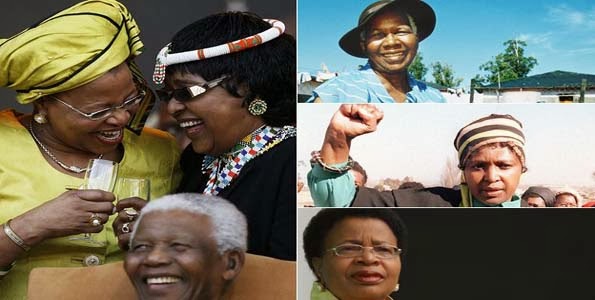
Graca, Winnie Mandela ni mtu na ‘dada yake’


Winnie Madikizela-Mandela, (77) aliinama kumbusu Graca Machel (68), kabla ya kukaa katika kiti cha tatu kutoka kile alichokalia mwanamke huyo. Graca Machel alimwambia maneno machache ‘dada yake’ Winnie wakati akimbusu.
Wanawake hao wote wakiwa wamevalia majaketi meusi na vilemba, walikumbatiana kwa sekunde kadhaa huku Winnie akitabasamu na Graca akitazama mbele.
Wote wawili wanaheshimika nchini Afrika Kusini kutokana na sababu mbalimbali. Winnie anaheshimika kwa mchango wake mkubwa wa kupigania ubaguzi wa rangi; Graca kwa moyo wake wa kujitolea kumtunza kiongozi wao mpaka anafariki dunia.
Hata hivyo Winnie amekuwa akikosolewa kutokana na sababu mbalimbali ikiwamo ile ya kuruhusu wapinzani wake wauawe kwa kuchomwa moto wakitumia mafuta ya petroli na matairi ya magari.
Mwaka 1988 alipatikana na hati ya kumuua kijana wa miaka 14 ambaye ilidaiwa alimtuhumu kuwa kibaraka, hata hivyo hukumu yake ilipunguzwa kutoka kuwa kifungo cha miaka sita jela na kuwa faini.
Winnie pia anatuhumiwa kwa kutokuwa mwaminifu katika ndoa yake iliyodumu kwa miaka 38 ingawa 27 kati ya hiyo hakuwa na mumewe ambaye alikuwa akitumikia kifungo katika gereza la Robben.
Graca Machel alifunga ndoa na Mandela wakati wa sherehe yake ya kutimiza miaka 80. Pamoja na kuwa Winnie na Mandela walitengana, katika kipindi cha ugonjwa wake kilichodumu kwa siku 181, alikuwa akimtembelea mara kwa mara.
Mjane wa Mandela, Graca,ambaye pia ni mjane wa Rais wa zamani wa Msumbiji, Hayati Samora Machel, alitumia muda wote kuwa pembeni mwa kitanda cha Mandela mpaka alipokata roho.
Ndugu wa karibu wanasema, daktari aliposema hakuna kitu kinachoweza kufanyika kuokoa uhai wa Mandela, Winnie alifika nyumbani hapo na alikuwepo muda wote mpaka kiongozi huyo alipokata roho.
Tangu Mandela afariki, Winnie amekuwa akionekana sana tofauti na Graca. Jumapili ya wiki iliyopita, ikiwa ni siku tatu tangu Mandela afariki, Winnie alikwenda kusali katika kanisa ambalo lilikuwa likifanya misa kuu ya kitaifa kumuombea Mandela .
Winnie alikaa pembeni ya Rais Jacob Zuma. Hata hivyo siku yake iliharibia na Mchungaji, Mosa Sono aliyekuwa akiongoza ibada hiyo baada ya kumtambulisha kwa jina la Graca. Kwa upande wake Graca alisali katika kanisa dogo lililopo karibu na nyumba ya Mandela.
Graca ni mdogo wangu
Kwa muda mrefu sasa Winnie amekuwa akisisitiza kuwa hakuna uhasama baina yake na Graca na anamuona kama mdogo wake kwa kuwa kiumri pia amemzidi.
Winnie aliwahi kunukuliwa akisema: “Namuita mdogo wangu, na yeye huwa ananiita dada, hata tunapozungumza huwa maongezi yanamuhusu mume wetu,” anasema Winnie.
Dunia yamuaga Mandela kwa heshima ya kipekee
Dunia imeamua kumpa heshima ya kipekee Nelson Mandela kwa mkusanyiko wa aina yake wa kumuaga kwenye kitongoji cha Soweto, ambapo zaidi ya viongozi 100 wa dunia wanahudhuria ibada hiyo.
Tangu viongozi walioko madarakani mpaka waliostaafu, halijawahi kushuhudiwa kuwa na watu wengi kiasi hiki; zaidi ya watu 95, 000 wamefurika uwanjani tangu usiku wa manane kuhakikisha wanapata nafasi.
Kitongoji hicho cha Jonnesburg ndiko alikokuwa akiishi Mandela kabla ya kukamatwa na kuwekwa gerezani kwa miaka 27, kwa hivyo ni mahala pa kihistoria kutoa heshima za mwisho kwa shujaa huyo wa mapambano dhidi ya ubaguzi wa rangi.
Kiasi cha viongozi 100 wanahudhuria, wakiwamo wa mataifa na Serikali, wafalme au warithi wao, achilia mbali watu wengineo mashuhuri duniani ikiwa ni pamoja na Katibu Mkuu wa Umoja wa Mataifa, Ban Ki-moon.
Wengine ni Mwenyekiti wa Halmashauri Kuu ya Umoja wa Afrika, Nkosazana Dlamini Zuma, na wajumbe wa Baraza la Wazee la Kimataifa aliloliunda mwenyewe Nelson Mandela, akiwamo Rais wa zamani wa Marekani, Jimmy Carter.
Marekani inawakilishwa na Rais Barack Obama na mkewe pamoja na marais wa zamani, George W. Bush na Bill Clinton na mkewe, waziri wa zamani wa mambo ya nchi za nje, Hillary Clinton.
Viongozi wengine ni pamoja na Rais Raul Castro wa Cuba, Hamid Karzai wa Afghanistan, Waziri Mkuu wa Uingereza, David Cameron, na Mwana wa mfalme Charles, Rais Pranab Mukhrejee wa India, Rais Dilma Russels wa Brazil na watangulizi wake wanne ikiwa ni pamoja na Lula da Silva,
Waziri mkuu wa Italia Enrico Letta, Kiongozi wa Mamlaka ya Utawala wa Ndani wa Palestina, Mahmoud Abbas na mawaziri wakuu wa Norway, Sweden na Canada, kwa kuwataja wachache tu.
China inawakilishwa na Makamu wa Rais, Li Yuanchao huku Japan ikiwakilishwa na mrithi wa kiti cha mfalme, Mwanamfalme Naruhito. Ujerumani inawakilishwa na Rais Joachim Gauck. Takriban viongozi wote wa bara la Afrika wanahudhuria pia ibada hiyo.
Ibada kuendelea
Ibada kadhaa nyingine zinafanyika hadi siku ya mazishi ya Mandela katika kijiji walichotokea wazee wake, Qunu, Desemba 15.
Mbali na ibada rasmi ya mazishi, maiti ya Nelson Mandela imewekwa katika Ikulu kuanzia Jumatano hadi ijumaa itakaposafirishwa kwa ndege hadi Mashariki ya Cape Town kwa mazishi.
Hatua za ulinzi zimeimarishwa. Afrika Kusini inauzoefu kutokana na maandalizi ya Kombe la Dunia la mwaka 2010.
Waziri wa Ulinzi, Nosiviwe Mapisa-Nqakula, amesema,”Kila kitu kiko tayari, tumejiandaa tangu miaka mitatu au minne iliyopita.”
Makala hii imeandikwa na Julieth Kulangwa kwa msaada wa vyombo vya habari.

Azimio la kuwataka Ghasia, Mwanri na Majaliwa kujipima lapitishwa


Dodoma.Bunge limepitisha azimio la kuwataka mawaziri katika Ofisi ya Waziri Mkuu Tawala za Mikoa na Serikali za Mitaa (Tamisemi), kujipima iwapo wanatosha kuendelea kuongoza wizara hiyo nyeti.
Azimio hilo lilipitishwa jana na wabunge kwa kura ya ndiyo bila kupingwa, baada ya kuhojiwa na Spika wa Bunge Anne Makinda iwapo wanaipokea taarifa ya Kamati ya Bunge ya Hesabu za Serikali (Laac) iliyowasilishwa na Mwenyekiti wake Rajabu Mbaruku.
Moja ya mapendekezo yake ni Waziri wa Tamisemi, Hawa Ghasia na manaibu wake, Aggrey Mwanri na Kassim Majaliwa kujipima kama wanatosha kuendelea kuongoza wizara hiyo kutokana na kugubikwa na vitendo vya ufisadi.
Kwa mujibu wa taratibu za Bunge, taarifa ya kamati inapowasilishwa na kupitishwa pamoja na mapendekezo yake, huwa ni azimio kamili ambapo Serikali hutakiwa kutoa maelezo ya utekelezaji wake.
Kabla ya azimio hilo kupitishwa, Mwenyekiti wa Laac, Rajabu Mbaruku alijibu michango ya wabunge waliochangia katika taarifa ya kamati yake iliyowasilishwa Ijumaa iliyopita, akiwemo Waziri Ghasia.
Akizungumza baadaye, Mbaruku alisema hayo ndiyo mapendekezo na Serikali itatakiwa kuyatolea maelezo ya jinsi yatakavyotekelezwa. “Hata waziri mkuu nimemtaja kwa jina, na nimesisitiza kama ananisikia kuhusu ofisi yake,” alisema.
Katika mchango wake, Waziri Ghasia alijaribu kupangua tuhuma mbalimbali zilizoelekezwa katika wizara yake ikiwamo kuwapo ufisadi, ubadhirifu na mtandao wa wizi unaohusisha Hazina, Wizara na Halmashauri.
Ghasia alikiri Halmashauri ya Mbarali ilitumiwa fedha kuliko kiwango kilichoidhinishwa na Bunge na kwamba
suala la halmashauri mbili za Tanga kupewa zaidi ya Sh2 bilioni haikuwa sahihi bali yalikuwa ni makosa ya Mkaguzi Mkuu wa Mdhibiti wa Hesabu za Serikali (CAG).
Kuhusu ufisadi wa zaidi ya Sh600 milioni zilizotolewa na wafadhili kwa ajili ya mpango wa maboresho ya Serikali za Mitaa, alisema haamini kama maneno yaliyonukuliwa na vyombo vya habari kuhusu fedha hizo yalisemwa na wafadhili.
Wafadhili wa mradi huo walinukuliwa wakilalamikia ufisadi huo na kudai kwa sasa hawana la kufanya na wanamwachia Rais, huku wakieleza kushangazwa na Rais kuteua watu dhaifu kuendesha wizara nyeti kama Tamisemi.
Kuhusu hilo, Ghasia alisema hadhani maneno hayo ni ya wafadhili akisema ni majungu, ni maneno ya waandishi kwa sababu huwa wanatafuta mambo yanayogusa jambo fulani ili kuuza magazeti.
Hata hivyo, Ghasia alikiri kwamba ulifanyika ukaguzi na yalibainika matumizi ambayo hayakufuata taratibu na kusisitiza kuwa fedha zilizotumika bila kufuata taratibu zilikuwa Sh444.8 milioni na siyo Sh600 milioni.
Alisema kuwa tuhuma kwamba anawalinda watuhumiwa wa ufisadi na kuwahamisha wale wanaotuhumiwa si za kweli kwani wizara imekuwa ikichukua hatua za kinidhamu dhidi ya watumishi hao na hata kuwafikisha kortini.
Alitolea mfano wa Halmashauri ya Kishapu ambayo watumishi 14 wamesimamishwa kazi na masuala yao hivi sasa yanashughulikiwa na ofisi ya Mkurugenzi wa Mashtaka (DPP) na Ofisi ya Takukuru.
Pamoja na maelezo ya Waziri Ghasia, bado Mwenyekiti wa Kamati alisisitiza kuwapo matatizo makubwa
Tamisemi na ndipo alipowataka Ghasia na Manaibu wake kujipima wenyewe kama bado wanafaa kuongoza wizara hiyo nyeti.
Mwenyekiti huyo alisema si kweli kama alivyosema Waziri Ghasia kuwa hakuna mtandao wa ufisadi na
kusisitiza kuwa fedha zilizopelekwa jijini Tanga hazikurudishwa Hazina na badala yake zilitumiwa na Halmashauri hiyo.
Alisema kinachoonekana ni kwamba ulikuwapo mpango wa kuzipeleka fedha kwenye baadhi ya Halmashauri nje ya fedha zilizoidhinishwa lakini baadaye fedha hurudishwa kwa wanamtandao huo baada ya kutakatishwa.
Mwenyekiti huyo alisema Halmashauri zinazopelekewa fedha hizo zilizo nje ya bajeti, hupelekewa fedha hizo kwa malengo ya kuzitakatisha kisha kuzirejesha Hazina ambapo wahusika hunufaika nazo.
Ijumaa wakati akiwasilisha taarifa ya kamati, kamati hiyo iliilipua Wizara ya Tawala za Mikoa na Serikali za Mitaa (Tamisemi) ikiituhumu kuwa sehemu ya mtandao wa ufisadi serikalini.
Alisema bado kuna ubadhirifu, ufisadi na utovu wa nidhamu wa hali ya juu wa matumizi ya fedha za umma kutokana na Tamisemi kutosimamia au yenyewe kuhusika moja kwa moja na ufisadi huo.
Mfano wa mwaka 2011/2012 ambapo Sh1.6 bilioni zilitumika nje ya bajeti iliyoidhinishwa katika halmashauri 38 na Sh2.6 bilioni zilihamishwa kutoka akaunti moja kwenda nyingine bila kurudishwa.
Kamati hiyo imebaini kwamba upo mtindo wa Serikali kutuma kwa Halmashauri kiasi kikubwa cha fedha kuliko kiasi cha fedha kilichoidhinishwa na Bunge katika fungu husika wakati wa upitishaji wa bajeti.
Kamati hiyo imetolea mfano wa Sh2 bilioni zilizotumwa Halmashauri ya Jiji la Tanga na Sh500 milioni zilizotumwa Halmashauri ya Mji wa Korogwe zikiwa zaidi ya kiasi kilichokuwa kimeidhinishwa na Bunge.
“Kitendo hiki ambacho kinafanyika kwa ushirikiano wa hali ya juu wa Hazina,Tamisemi na Halmashauri kinaashiria kuwapo mtandao wa kutisha wa kifisadi baina ya mamlaka hizo,” alisema.
Kamati hiyo imeituhumu pia Tamisemi inayoongozwa na Waziri Hawa Ghasia, kuwahamisha haraka watumishi wanaotuhumiwa kufanya ubadhirifu kutoka halmashauri moja kwenda nyingine.
“Kamati imebaini kwamba Tamisemi imekuwa ikitumia mtindo huu kuwalinda watumishi mafisadi ndani ya halmashauri na kuifanya kamati iamini Tamisemi ni sehemu ya mtandao huu,” imesema.
Mwenyekiti wa kamati hiyo alisema kwa makusudi mazima, Tamisemi imekuwa ikieneza saratani hiyo ya ufisadi kwenye halmashauri nyingi iwezekanavyo na kuitaka Serikali kuachana na mtindo huo.
Ubadhirifu Wakurugenzi 70
Itakumbukwa Agosti 19 mwaka huu, Kamati ya Hesabu za Serikali za Mitaa (LAAC), ilitoa taarifa yake baada ya kubaini kuwepo kwa mtandao wa ufisadi unaoshirikisha Wakurugenzi 70 wa Halmashauri mbalimbali hapa nchini ambao wanashirikiana na baadhi ya Watendaji wa Ofisi ya Tawala za Mikoa na Serikali za Mitaa (Tamisemi) na Kitengo cha Hazina.
Baadhi ya halmashauri hizo ni pamoja na Wilaya ya Monduli, Arusha, Mwanza, Mbeya na Ilala.
Ilielezwa kuwa Tanzania Bara ina halmashauri 134, kwa hiyo ina maana zaidi ya nusu ya wakurugenzi wanajihusisha na mambo hayo.
“Baadhi ya wakurugenzi hao walihamishwa kwenye vituo vyao vya kazi kutokana na kashfa ya matumizi mabaya
ya fedha za Serikali, lakini bado wanajihusisha na mambo haya,” alisema Mbarouk alipokuwa akiwasilisha taarifa yake kwa waandishi wa habari.
“Kuna zaidi ya Wakurugenzi 70 wako kwenye mtandao wa ufisadi kwa kushirikiana na watendaji wa Hazina na Tamisemi, jambo ambalo limesababisha halmashauri zao kupata hati chafu kwa miaka mitano mfululizo,” alisema Mbarouk.
Aliongeza wakurugenzi hao wamekuwa wakishirikiana na wahasibu wao katika kutumia vibaya fedha za Serikali zinazotolewa kwa ajili ya kuendeleza miradi mbalimbali ya maendeleo katika halmashauri zao.
Akitolea mfano wa Mkurugenzi wa Jiji la Mwanza, Wilson Kabwe ambaye halmashauri yake ilifanya vibaya katika ripoti ya Mdhibiti na Mkaguzi Mkuu wa Hesabu za Serikali (CAG), lakini hajachukuliwa hatua na badala yake amehamishwa kuwa Mkurugenzi wa Jiji la Dar es Salaam.